
Introduction to Auto Insurance
Auto insurance is a vital component of responsible vehicle ownership and contributes significantly to the financial safety of both drivers and their vehicles. This type of insurance offers protection against potential losses that may arise from accidents, theft, or damage to the vehicle. In the United States, the necessity for auto insurance is underscored by state laws mandating minimum coverage levels, which can vary from one locality to another. Such regulations ensure that all drivers maintain a certain degree of financial responsibility, thereby safeguarding consumers and other road users alike.
The selection of an auto insurance provider is influenced by various factors that potential policyholders must consider carefully. These include the range of coverage options available, the reputation of the provider, customer service quality, and the pricing structure. Additionally, drivers may look for benefits such as discounts for safe driving and bundling policies that can yield significant savings. Each individual’s unique circumstances, such as driving habits, the type of vehicle, and personal preferences, play a crucial role in determining the most suitable auto insurance provider.
The auto insurance market in the USA is diverse and competitive, comprising a mix of well-established corporations and newer entrants. This dynamic environment creates ample opportunities for consumers to compare offerings, ensuring that they can find and select a policy tailored to their needs. Insurers often utilize technology and analytics to enhance the customer experience, from obtaining quotes to managing claims, thereby improving overall service efficiency. As the landscape continues to evolve, understanding the fundamentals of auto insurance, alongside emerging trends, will be essential for consumers aiming to make informed decisions.
Criteria for Selecting the Best Auto Insurance Companies
When evaluating auto insurance companies, it is essential for consumers to consider several key criteria that significantly influence the overall insurance experience. Understanding these factors can help individuals make informed decisions and select a provider that adequately meets their needs.
One of the foremost criteria is coverage options. Different auto insurance companies offer various policies, including liability, collision, comprehensive, uninsured/underinsured motorist coverage, and additional endorsements. It is important for consumers to understand what each type of coverage entails and assess whether the available options align with their specific requirements.
Pricing also plays a crucial role in the selection process. Potential policyholders should compare premium rates among different providers to ensure they receive competitive pricing. However, it’s vital to note that the cheapest option may not always provide the best value. Consumers should evaluate coverage limits, deductibles, and any hidden fees that could affect the overall cost.
Another critical factor is customer service. A company’s reputation regarding customer support can greatly impact the insurance experience. Reviews and ratings from existing policyholders can give insights into how responsive and helpful a company is when clients need assistance. A provider with excellent customer service can enhance trust and satisfaction among its clients.
The claims process is equally important, as it represents a pivotal moment when customers need the full support of their insurance. Evaluating the efficiency and accessibility of a company’s claims process can indicate how smoothly claims will be handled post-accident. A straightforward, user-friendly claims experience is essential for peace of mind.
Finally, assessing the financial stability of an insurance provider is critical. Companies with strong financial ratings indicate their ability to pay claims reliably. Tools and resources such as AM Best and Standard & Poor’s ratings can assist consumers in determining the financial health of various auto insurance companies, ensuring they choose a provider that will be there when needed.
Review of Leading Auto Insurance Companies
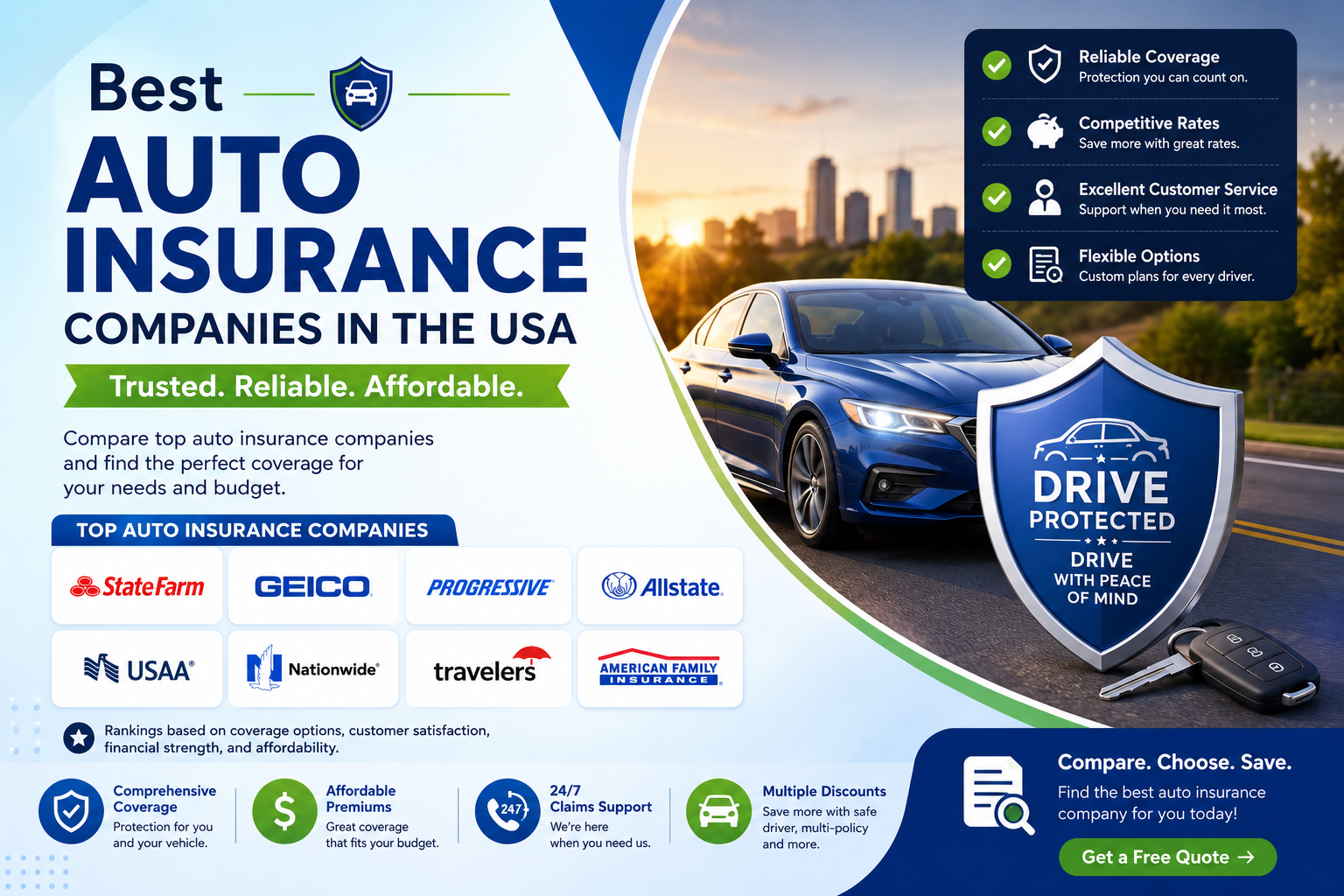
In the competitive landscape of auto insurance, several companies stand out for their comprehensive coverage options and customer satisfaction. Here, we present an analysis of some of the top auto insurance providers in the USA, focusing on their unique offerings, types of coverage, and customer ratings.
State Farm is one of the largest auto insurers in the nation, known for its extensive network of agents and wide range of coverage options. Customers can choose from liability, comprehensive, and collision coverage, along with optional add-ons like roadside assistance and rental car reimbursement. State Farm consistently receives high ratings for customer service, making it a preferred choice for many drivers.
Geico has gained popularity due to its competitive pricing and user-friendly online platform. Offering various types of coverage, including liability and collision, Geico is particularly noted for its memorable advertising campaigns that resonate with many consumers. Customers appreciate the ease of obtaining quotes online, and their user reviews often reflect positive experiences, especially regarding claims processing.
Progressive is well-recognized for its innovative approach to auto insurance. The company offers unique features like the Snapshot program, which allows drivers to earn discounts based on their driving habits. Progressive provides a wide range of coverage options, including liability, collision, and comprehensive, alongside valuable features such as 24/7 customer service. The insurer’s ratings frequently highlight its affordability and customer support.
Allstate offers diverse coverage plans and numerous options for customization. It provides standard coverage components alongside optional features like accident forgiveness and vanishing deductibles. Allstate’s commitment to customer advocacy, supported by various local agents, plays a significant role in its high customer satisfaction ratings. Overall, Allstate represents a strong choice for drivers seeking personalized service.
Each of these companies excels in different aspects, and prospective policyholders should assess their unique needs to make informed decisions. Comparative insights into coverage options and pricing will empower consumers to choose the best auto insurance provider for their requirements.
Coverage Options Among Top Providers
Auto insurance is essential for protecting drivers against financial loss in case of accidents, theft, or other unforeseen events. Leading auto insurance providers offer a range of coverage options tailored to meet the diverse needs of consumers. Understanding these options is crucial for making informed decisions.
The most fundamental type of auto insurance is liability coverage. This is typically required by law and helps pay for the damages or injuries incurred by other parties in an accident for which you are at fault. Liability coverage is divided into two parts: bodily injury liability, which covers medical expenses for the other party, and property damage liability, which takes care of damages to the other party’s vehicle.
Another important coverage option is collision coverage. This pays for the damages to your own vehicle after an accident, irrespective of who is at fault. It can be a vital aspect of a comprehensive auto insurance policy, especially for newer vehicles where repair costs can be significant.
Comprehensive coverage offers protection against non-collision-related damages, such as theft, vandalism, fire, or natural disasters. This type of coverage can be beneficial for drivers who want to safeguard their vehicles against a wide array of risks.
Uninsured motorist coverage is also critical to consider. It protects you in instances where you are involved in an accident with a driver who lacks adequate insurance coverage. This ensures that you can still recover costs for medical expenses and vehicle repairs.
Additional features like roadside assistance and rental car coverage can further enhance your auto insurance policy. Roadside assistance provides support in case of breakdowns, while rental car coverage helps you access a temporary vehicle while your own car is being repaired. Understanding these various coverage options can help consumers select the best auto insurance providers to meet their needs.
Customer Satisfaction and Reviews
Customer satisfaction ratings play a crucial role in determining the reliability of auto insurance providers. A review of various statistics from reputable sources indicates that the level of contentment among policyholders often correlates with service quality and claims handling efficiency.
According to the 2022 J.D. Power U.S. Auto Insurance Study, the top auto insurance companies consistently receive high marks for their customer service. Major players in the industry, such as Geico and State Farm, have excelled in providing seamless customer experiences. These companies are frequently lauded for their prompt responses, user-friendly digital platforms, and effective communication.
Moreover, customer reviews reveal insights on claims handling, an essential component of auto insurance services. For instance, consumers have noted that Nationwide’s claims process is straightforward and efficient, leading to quicker resolutions. In contrast, some insurers have received criticisms regarding lengthy handling times and lack of transparency during the claims process. Such feedback highlights the importance of choosing a provider with a solid reputation in claims management.
An extensive survey by Consumer Reports indicates that dissatisfaction can arise due to unclear policy terms and unexpected premium hikes, which some customers experience after filing a claim. This underscores the necessity for thorough understanding and transparency from auto insurers, which is paramount for long-term customer loyalty.
In addition to quantitative scores, qualitative feedback from policyholders sheds light on their overall experiences. Many customers prioritize factors such as personalized service, helpful representatives, and the willingness of insurers to accommodate individual needs. These aspects greatly contribute to higher satisfaction rates and stronger customer relationships.
Through careful consideration of customer feedback regarding service quality, claims handling, and overall experiences, prospective policyholders can make informed decisions. Understanding these dynamics is essential in navigating the complexities of auto insurance selection and ensuring satisfaction with their chosen provider.
Pricing Trends in Auto Insurance
Auto insurance premiums are influenced by a myriad of factors that vary across different regions and demographics. Understanding these pricing trends is crucial for consumers seeking to find the best rates tailored to their individual circumstances.
One of the foremost factors affecting auto insurance premiums is demographic data, which includes age, gender, and marital status. Generally, younger drivers, particularly those under 25, tend to face higher premiums due to their lack of driving experience and statistically higher accident rates. Additionally, gender can play a role, as studies have shown that male drivers often pay more than female drivers, particularly at younger ages. Marital status also influences pricing, with married individuals typically benefiting from lower rates due to perceived stability.
Driving history is another significant determinant of pricing trends in auto insurance. Insurers assess a driver’s record to gauge risk. A history of traffic violations, accidents, or claims will likely lead to higher premiums. Maintaining a clean driving record can significantly reduce insurance costs over time. Moreover, the type of vehicle insured also greatly impacts pricing. High-performance cars and those with high theft rates generally incur higher premiums compared to more economical or safer vehicles.
Location is yet another key variable that can affect auto insurance rates. Urban areas tend to have higher rates due to increased risks of accidents and theft, while rural areas may offer lower premiums. Consumers should analyze local market trends and compare rates from different providers when seeking auto insurance.
For consumers looking to secure the best rates, several strategies can be employed. Shopping around and obtaining quotes from multiple insurance companies may yield better pricing. Additionally, bundling policies, increasing deductibles, and taking advantage of discounts for safe driving can lead to significant savings. Staying informed about changes in the insurance landscape can empower consumers to make wise decisions.
Comparative Analysis of Discounts and Benefits
The landscape of auto insurance in the USA is not just about coverage options; it also significantly hinges on the discounts and benefits that companies offer to policyholders. Various auto insurance providers implement discount programs as a way to attract customers and encourage safer driving habits, ultimately impacting the overall premium costs for insured individuals.
One major category of available discounts is the multi-policy discount. This typically allows customers to bundle their auto insurance with other policies, such as homeowners or renters insurance. By doing so, they can often secure substantial savings on their premiums. Many providers recognize that customers who commit to multiple policies are likely to remain loyal, and thus, they incentivize this behavior with lower rates.
Another common discount offered by auto insurance companies is the safe driver incentive. Insurers frequently reward policyholders who maintain a clean driving record free from accidents or violations. This not only reflects responsible driving behavior but also can lead to significant savings on annual premiums. In fact, some companies may offer discounts ranging from 10% to 30% for those who have not made any claims or traffic infractions within a specified timeframe.
Student discounts represent another vital component of the discount offering by various auto insurance providers. Often, insurers recognize that young drivers are typically less experienced on the road and thus, they may provide discounts for students who maintain a certain grade point average. This strategy not only encourages academic achievement but also helps keep insurance premiums manageable for young drivers and their families.
In conclusion, the diverse range of discounts and benefits offered by auto insurance companies plays a crucial role in shaping premium costs. By understanding and leveraging these offers, consumers can significantly reduce their out-of-pocket expenses for auto coverages while promoting safer driving habits and encouraging responsible behavior among new drivers.
Future Trends in Auto Insurance
The auto insurance industry is currently undergoing significant transformations driven by technological advancements and changing consumer behaviors. Foremost among these trends is the integration of technology into the insurance process, which has begun to redefine the way services are delivered and premiums are calculated. Insurers are increasingly adopting telematics, which involves the use of devices installed in vehicles to monitor driving behaviors. This data allows companies to offer personalized premiums based on individual risk profiles, fostering a shift towards usage-based insurance models.
Furthermore, the rise of mobile applications and online platforms has enhanced customer engagement and service efficiency. Today’s consumers expect an omnichannel experience, enabling them to manage their policies, file claims, and seek assistance through various digital channels. Online services not only provide convenience but also empower consumers to make informed decisions by comparing policies and prices with ease.
Another notable trend is the growing focus on customer-centric approaches. Insurers are realizing the importance of tailoring their offerings to meet the evolving needs of consumers. This includes enhancing coverage options for emerging vehicles and adapting policies to cover new forms of mobility, such as ridesharing and electric vehicles. As the auto industry advances towards more sustainable options, insurance providers will also need to consider the unique risks associated with these innovations.
Finally, regulatory changes and a heightened emphasis on data privacy present both challenges and opportunities for the auto insurance sector. Companies are increasingly tasked with ensuring compliance while leveraging data analytics to enhance risk assessment and underwriting processes. As the industry adapts to these trends, consumers can expect more transparent, flexible, and personalized auto insurance solutions in the years to come.
Conclusion and Final Recommendations
In closing, the process of selecting an auto insurance provider can be daunting, given the myriad options available in the market today. This comprehensive review has outlined the most prominent auto insurance providers in the USA, highlighting their unique offerings, coverage options, and customer service performance. Each provider possesses distinct advantages that may cater to different consumer needs.
When considering auto insurance, it is critical to evaluate your personal circumstances. Factors such as your driving history, the type of vehicle you own, and your budget for monthly premiums should all play a significant role in your decision-making process. Additionally, understanding the differences between liability, comprehensive, and collision coverage will further empower you to make informed choices that align with your requirements.
Furthermore, utilizing online comparison tools can enhance your ability to find the best policy for your situation. Many consumers overlook the potential savings available through these platforms, which allow for the quick comparison of rates, coverage, and customer service ratings across various providers.
As you embark on your journey to select the right auto insurance, remember that customer reviews and satisfaction ratings can offer valuable insight into a provider’s performance and reliability. Ultimately, the best provider for you will depend on a careful consideration of various factors, including service quality, policy options, and premium rates.
In conclusion, taking the time to assess your needs and comparing different insurance policies will ensure that you make a well-informed decision. With diligence and thorough research, you will be better equipped to choose an auto insurance provider that will meet your needs and provide peace of mind on the road.