
Understanding Bad Credit
Bad credit is a term commonly used to describe an individual’s poor creditworthiness, as reflected in their credit score. Credit scores typically fall within a range of 300 to 850, with scores below 580 categorized as poor or bad credit. Lenders use these scores as a quick assessment of a borrower’s ability to repay loans and to manage their financial obligations.
Credit scores are influenced by various factors, including payment history, credit utilization ratio, length of credit history, types of credit used, and recent credit inquiries. Payment history is the most significant factor, accounting for approximately 35% of the score. Late payments, defaults, and bankruptcies can dramatically lower an individual’s credit score. The credit utilization ratio, which compares outstanding credit card debt to the total credit limit, plays a crucial role as well. A high utilization ratio can signal to lenders that a borrower may be overextending themselves financially.
Distinguishing between different credit ratings is essential. For instance, a credit score between 580 and 669 is often considered fair, allowing some access to loans but often at higher interest rates. In contrast, scores below 580 are seen as bad credit, prompting more scrutiny from lenders. Each lender may have its own benchmarks for what constitutes bad credit, but typically, scores below 650 will drastically limit loan options.
Moreover, certain financial behaviors can negatively impact credit scores beyond specific actions, such as consistently maintaining low account balances, quickly paying off debts, and refraining from taking on unnecessary credit. It’s imperative for individuals with bad credit to understand the factors contributing to their score and take steps towards improvement. This awareness not only assists in securing a personal loan but also helps in fostering better financial habits in the long term.
The Importance of Personal Loans
Personal loans serve a crucial role in the financial landscape, especially for individuals with bad credit. These loans are typically unsecured, meaning they do not require collateral, which makes them accessible to a wide range of borrowers, including those facing credit challenges. The primary purpose of personal loans is to provide necessary financial relief during difficult times, enabling borrowers to navigate their financial uncertainties with greater ease.
One of the key benefits of personal loans is their ability to consolidate debt. For individuals struggling with multiple debt obligations, personal loans can offer a way to streamline payments by combining several high-interest debts into a singular loan with potentially lower interest rates. This simplification not only makes managing finances easier but can also lead to savings in interest payments over time.
Moreover, personal loans are often utilized to cover emergencies such as medical expenses, home repairs, or unexpected job loss. In such situations, having quick access to funds can be critical, ensuring that individuals can address urgent needs without significant delay. Personal loans can act as a financial safety net, providing peace of mind during urgent situations.
In addition to addressing immediate financial needs, personal loans can also play a vital role in rebuilding credit. When managed responsibly, consistent on-time payments can positively impact one’s credit score. This can be particularly important for individuals with bad credit who are seeking to improve their credit standing over time. By demonstrating a commitment to repayment, borrowers may position themselves for better loan terms in the future.
Overall, while obtaining a personal loan with bad credit can present challenges, the potential benefits—such as financial relief, debt consolidation, and credit rebuilding—make them a valuable option for many individuals looking to improve their financial situation.
Exploring Your Options
When seeking a personal loan with bad credit, it is essential to understand the different types of lenders available in the market. Each lender type comes with its own set of advantages and disadvantages, influencing your overall borrowing experience. This section aims to highlight these options to help individuals make informed decisions.
First, traditional banks are an option for borrowers, although they often have stringent lending standards. Individuals with bad credit may find it challenging to secure a loan through these institutions. If a loan is available, the terms may not be favorable, including higher interest rates or fees. Therefore, while they provide a sense of reliability and established protocols, they may not be the best choice for those with credit challenges.
Credit unions offer a more personalized lending experience compared to traditional banks. As member-owned cooperatives, they tend to offer lower interest rates and fees. Many credit unions have programs specifically designed to assist individuals with poor credit histories. However, membership requirements may limit access, and the loan amounts might be smaller, posing potential limitations for users looking for larger loans.
Online lenders have become increasingly popular, particularly among borrowers with bad credit. These platforms usually have less stringent requirements and can process applications more quickly than traditional financial institutions. Yet, it is crucial to research these lenders, as terms and interest rates can vary significantly. Some online lenders cater specifically to individuals with credit issues, providing a viable solution for many.
Lastly, peer-to-peer lending represents an innovative approach to borrowing, connecting borrowers directly with individual investors. This method can provide flexibility and competitive rates. However, the availability of funding can be uncertain, and the loan amounts may vary based on investor interest.
In conclusion, understanding the various lender options is vital for securing a personal loan with bad credit. Evaluating traditional banks, credit unions, online lenders, and peer-to-peer lending opportunities can help identify the most suitable path for financial assistance based on individual circumstances.
Improving Your Chances of Approval
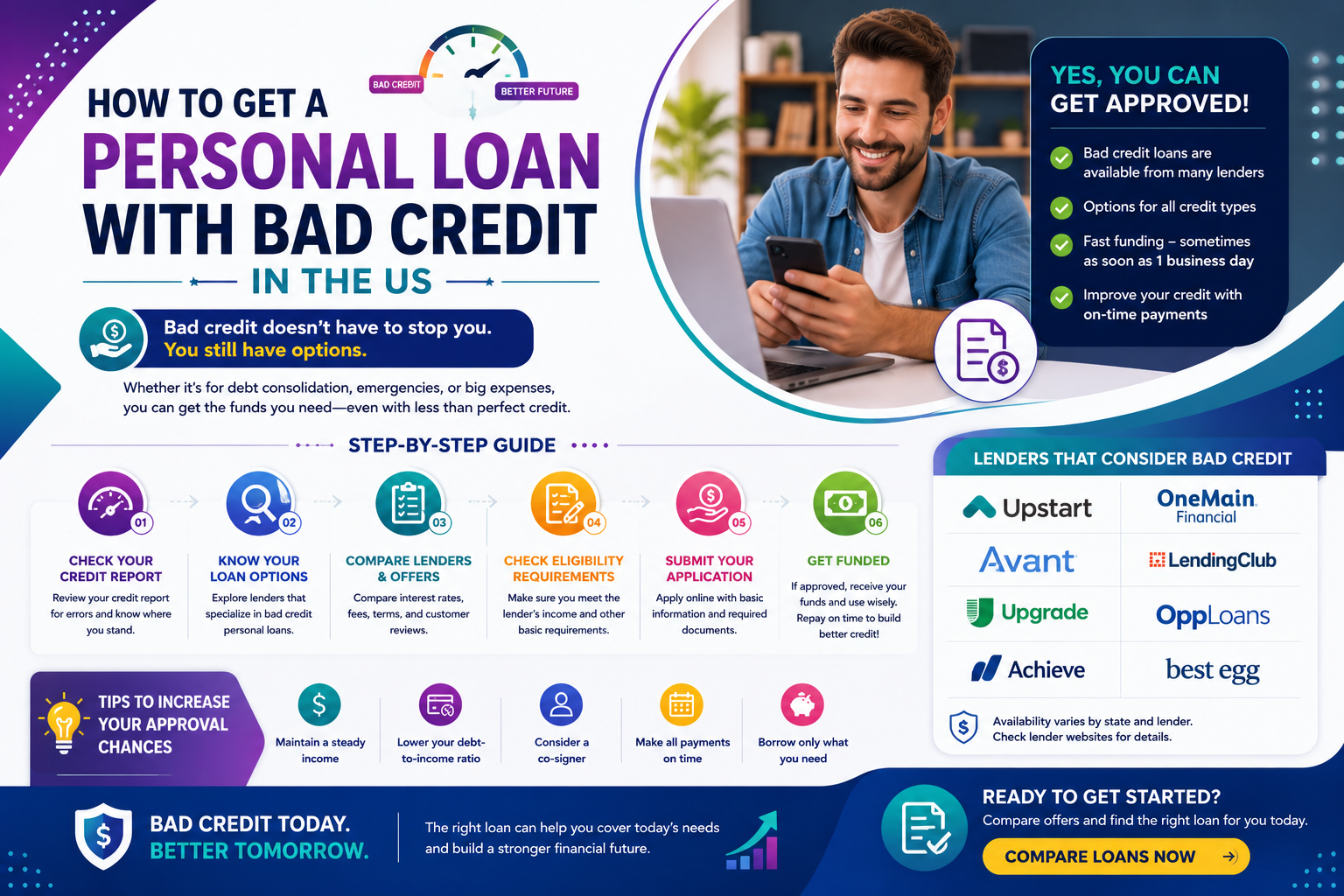
Obtaining a personal loan with bad credit can be challenging, but there are several strategies you can implement to enhance your chances of approval. One of the most effective steps is to focus on improving your credit score prior to applying. A higher credit score not only makes you a more attractive candidate to lenders but can also result in better interest rates and terms. Consider checking your credit report for errors and disputing any inaccuracies, as well as timely paying down any outstanding debts to positively impact your credit profile.
Another practical approach is to reduce your overall debt-to-income ratio. Lenders often assess how much of your income goes towards existing debts when evaluating your loan application. Paying down existing loans and credit cards can demonstrate to potential lenders that you are taking steps to manage your finances responsibly. Additionally, avoiding new debt during this period can help you present a more favorable financial picture.
Offering collateral in the form of a secured loan is another viable option if you’re struggling with bad credit. Secured loans require borrowers to put up an asset, such as a car or savings account, which provides lenders with a sense of security. This can often lead to a higher chance of loan approval, regardless of your credit history. Furthermore, finding a co-signer can significantly improve your loan application prospects. A co-signer with a good credit standing can reassure lenders and might even help you secure a lower interest rate.
Lastly, exploring various lenders is crucial. Traditional banks may have strict criteria, but credit unions or online lenders could be more flexible and willing to work with individuals who have poor credit. Each lender has different policies, so shopping around can yield better results. By applying these strategies, you can improve your chances of securing a personal loan despite having bad credit.
Pre-Loan Considerations
Before embarking on the journey of obtaining a personal loan, particularly with a challenging credit history, there are several vital considerations that potential borrowers must understand. The first step is comprehending the total cost of the loan, which encompasses more than just the principal amount. Borrowers should be aware of how interest rates significantly impact the overall repayment amount.
Interest rates can vary widely based on the lender, the borrower’s credit profile, and prevailing market conditions. It is essential for individuals to shop around and seek informative insights into typical rates applicable to their situation. Alternatively, investigating the range of interest rates available in the market can empower borrowers to make informed decisions. A higher interest rate can substantially escalate the repayment sums over the life of the loan, so securing the most favorable rate is paramount.
Additionally, understanding the terms of the loan provides clarity on repayment expectations. Loan terms typically vary from a few months to several years, and each option comes with its advantages and disadvantages. Shorter terms may carry higher monthly payments but lead to less paid in interest overall. Conversely, longer terms may provide lower monthly payments, but the borrower may ultimately pay more in interest.
Borrowers should also examine any potential fees associated with the loan. These fees can include origination fees, processing fees, and prepayment penalties. Awareness of these additional costs is crucial, as they can quickly add to the financial burden. Accordingly, comparing offers from various lenders is advisable. Utilizing an organized approach to evaluate different loan offers side-by-side will aid borrowers in pinpointing the most efficient financing option.
In summary, taking out a personal loan requires due diligence. Understanding the total costs, interest rates, loan terms, and associated fees can equip borrowers, particularly those with bad credit, to make the most advantageous choices and avoid costly errors in their financial journey.
What to Expect During the Application Process
Applying for a personal loan with bad credit can be a daunting task. However, understanding what to expect during this process can simplify your experience. The application process typically begins with selecting a lender that specializes in offering personal loans to individuals with less-than-perfect credit. It is important to research different lenders, as they may have varying requirements and terms.
Most lenders will require you to fill out a loan application, which can often be completed online. This application usually includes personal information such as your name, address, Social Security number, and income. Additionally, lenders will typically require information regarding your current financial situation, including any existing debts and your monthly expenses. Being prepared to provide accurate information is crucial, as discrepancies may delay the approval process.
Documentation plays a vital role in the personal loan application process. Commonly required documents include proof of income—such as pay stubs or tax returns—as well as identification and sometimes even references. Lenders use these documents to assess your ability to repay the loan. It is advisable to gather all necessary paperwork before starting your application to streamline the process.
Lenders will also examine factors beyond just your credit score. While having bad credit can pose a challenge, lenders may consider other aspects of your financial history, such as your income level and employment stability. This comprehensive assessment helps them to gauge your risk as a borrower, enabling them to make a more informed decision regarding your loan application.
The timeline from application to approval can vary significantly depending on the lender and the complexity of your financial situation. In many cases, the application process can take anywhere from a few days to a couple of weeks. However, being proactive and providing all required documents can help expedite this timeline. By understanding what to expect during the application process, borrowers can better prepare and increase their chances of obtaining personal loans, even with bad credit.
Understanding the Terms of Your Loan
When considering a personal loan, especially under the constraints of bad credit, it is crucial to familiarize yourself with the underlying terms and conditions that will govern the agreement. One of the fundamental aspects to understand is the interest rate, which is the cost of borrowing money expressed as a percentage of the total loan amount. This rate can vary depending on your creditworthiness, the lender’s policies, and current market conditions.
Another critical term is the Annual Percentage Rate (APR). Unlike the nominal interest rate, the APR includes not only the interest on the loan but also any additional fees or costs associated with obtaining the loan. Understanding the APR is essential as it gives a more comprehensive picture of what borrowing will actually cost over time, allowing borrowers to compare different loan offers effectively.
Additionally, the payment schedule outlines how often payments are due and the amount of each payment. This schedule might be monthly, bi-weekly, or weekly, depending on the lender’s terms. Knowing the frequency and amount of payments helps borrowers budget and manage their finances accordingly.
It is also important to be aware of any potential penalties for missed payments. Many lenders impose late fees or increase the interest rate if payments are not made on time. Understanding these penalties can help avoid unnecessary costs and negative implications on your credit score, especially for borrowers with bad credit.
Being well-versed in these key terms can empower borrowers to make informed decisions regarding personal loans, ultimately leading to better financial outcomes. By taking the time to understand the interest rates, APR, payment schedules, and penalties associated with loans, borrowers are better positioned to navigate their options effectively, avoiding potential pitfalls in their borrowing journey.
Managing Your Loan Responsibly
Once a personal loan has been approved, the next crucial step is to manage it responsibly. A well-structured repayment plan is essential for ensuring that the loan is paid off in a timely manner and that financial stability is maintained throughout the repayment period.
Creating a repayment plan should start with a thorough analysis of your financial situation. Take into account your income, monthly expenses, and any other financial obligations. This assessment will help you determine how much you can afford to allocate towards the loan payment each month without compromising your essential expenses. It’s advisable to set aside funds specifically for the loan payment to avoid the temptation of spending that money elsewhere.
Timely payments play a significant role in managing personal loans effectively. Not only do they help you avoid late fees, but they also contribute positively to your credit score over time. Always set reminders for payment due dates or consider setting up automatic payments if feasible. This convenience eliminates the risk of forgetting a payment and accruing additional charges.
To further minimize financial strain while repaying a personal loan, it can be beneficial to explore the option of making extra payments when possible. If your financial situation allows, paying more than the minimum requirement can lead to significant interest savings over time and help you pay off the loan quicker. Conversely, if you experience financial difficulties, communicating with your lender can be advantageous. Many lenders offer options such as deferments or modified payment plans for borrowers facing hardship.
Ultimately, managing your loan responsibly requires careful planning and discipline. By creating a solid repayment strategy, ensuring timely payments, and remaining proactive in your finances, you can navigate the repayment process with greater ease, securing your financial future even with a personal loan. In conclusion, the key to effective loan management lies in a combination of strategic planning and consistent effort to meet your financial obligations.
Alternative Solutions for Bad Credit Borrowers
For individuals faced with the challenge of obtaining traditional personal loans due to bad credit, exploring alternative solutions is crucial. Many resources are available that can help bridge the financial gap without the burden of high-interest rates associated with subprime loans. One option is seeking credit counseling services. These organizations provide guidance on managing debt, budgeting effectively, and improving credit scores over time. Credit counselors can work with clients to create a personalized action plan to handle their financial situation more effectively, potentially reducing the need for loans altogether.
Another avenue worth considering is government assistance programs designed to support individuals with financial hardships. Various federal and state programs offer temporary financial assistance, grants, or low-interest loans for specific purposes such as home repairs, education, or emergency expenses. These programs can be instrumental for those struggling with bad credit, allowing them to access funds with more favorable terms.
In addition to these options, community resources should not be overlooked. Many local non-profit organizations provide assistance through community funds, food banks, or emergency loans to support individuals in financial distress. These resources often come without the stringent qualification criteria that traditional lenders impose. Furthermore, some credit unions and community banks offer lower-interest financing solutions that cater specifically to borrowers with imperfect credit histories. Such institutions are typically more willing to work with individuals, understanding their unique circumstances.
Ultimately, while obtaining personal loans may be challenging for those with bad credit, various alternatives exist. By taking advantage of credit counseling, exploring government assistance programs, and utilizing community resources, borrowers can find financial relief without succumbing to the pitfalls of high-interest loans.