
Overview of Health Insurance in the U.S.
Health insurance serves a crucial role in the American healthcare system, providing individuals and families with the necessary financial protection to access medical services. It acts as a safety net, reducing the economic burden associated with healthcare expenses, which can be substantial in the United States. The primary purpose of health insurance is to cover the costs of medical care, making it more accessible to the population.
There are several types of health insurance plans available in the United States, each designed to cater to different needs and circumstances. Employer-sponsored plans are one of the most common forms of health insurance, where employers provide coverage as part of their employee benefits package. These plans often feature varying levels of coverage and premiums depending on the employer’s offerings and employee selection.
Additionally, there are government programs such as Medicare and Medicaid that provide health insurance to specific groups. Medicare primarily serves individuals aged 65 and older, as well as certain younger individuals with disabilities. On the other hand, Medicaid is aimed at low-income individuals and families, offering comprehensive health coverage based on financial eligibility. These programs are essential in ensuring that vulnerable populations have access to necessary healthcare services.
Individual health insurance plans also play a significant role in offering coverage for those who do not qualify for employer-sponsored or government-funded programs. These plans can be purchased through various channels, including state marketplaces established by the Affordable Care Act. They allow consumers to choose from a range of coverage options, ensuring that they can find a plan that best meets their healthcare needs.
The significance of health insurance cannot be overstated. It not only facilitates timely medical care but also promotes better overall health outcomes. By providing financial support for preventive services, treatment interventions, and ongoing healthcare needs, health insurance is pivotal in enhancing access to healthcare across the United States.
Factors Influencing Health Insurance Premiums
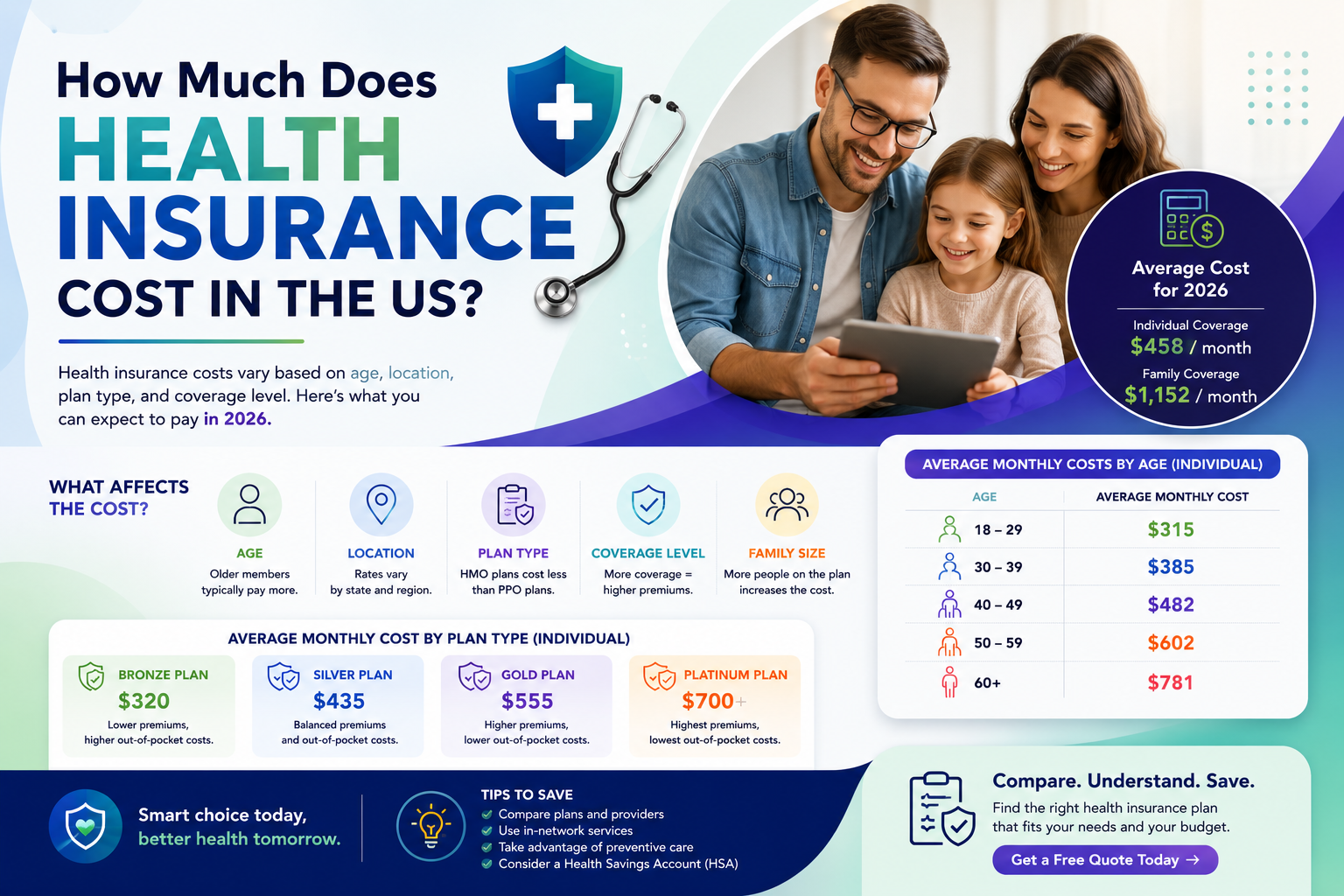
Health insurance premiums in the United States are determined by a multitude of factors, each contributing significantly to the overall cost individuals and families encounter. One of the foremost considerations is age. Generally, older individuals tend to pay higher premiums compared to their younger counterparts, as they statistically require more medical services and attention. Insurers assess this risk and adjust the premiums accordingly, reflecting the likelihood of increased healthcare utilization.
Location also plays a critical role in the determination of health insurance costs. The geographic area in which a policyholder resides can greatly affect premium rates. This is often attributed to the local cost of living, the availability of healthcare providers, and regional health trends. For instance, urban areas may have different health service costs than rural areas, leading to variances in insurance premiums.
Another important factor is an individual’s health status. Healthier individuals generally face lower premiums as they are perceived as lower risk, while those with pre-existing conditions or chronic illnesses may encounter higher rates. Insurers utilize detailed risk assessments that evaluate an applicant’s health history and lifestyle choices to inform their pricing models.
The type of insurance plan selected also impacts premiums significantly. Plans with broader networks, lower deductibles, or extensive coverage options typically require higher monthly payments than basic plans. Coverage level is closely tied to the type of plan, with comprehensive policies that cover a wide range of services often coming at a steeper price point. Understanding these factors is essential for consumers seeking to make informed decisions regarding their health insurance. Effective risk assessment and underwriting processes are employed by insurers to evaluate these components and manage the associated costs for both the insurer and insured.
Average Costs of Health Insurance Plans
The landscape of health insurance costs in the United States is intricate, with various factors influencing the average premiums and out-of-pocket expenses. As of recent data, the average premium for individual health insurance plans hovers around $450 per month. This figure can vary significantly based on a range of factors, including geographic location, the specific insurance provider, and the level of coverage chosen.
For family plans, the costs are considerably higher. On average, a family policy may cost approximately $1,200 to $1,500 per month. Families opting for comprehensive coverage that includes additional benefits, such as dental and vision, often experience the highest premium rates. Furthermore, the size of the family and the ages of covered members can further influence overall costs.
When analyzing health insurance costs, it is crucial to consider the different types of plans available, notably the Health Maintenance Organization (HMO), Preferred Provider Organization (PPO), and Exclusive Provider Organization (EPO) plans. HMO plans tend to offer the lowest premiums, averaging about $400 monthly for individuals and $1,100 for families, but usually require members to select primary care physicians and referrals for specialist visits. Conversely, PPO plans, while providing more flexibility in choosing healthcare providers, generally come with higher monthly premiums, averaging $500 for individuals and $1,400 for families.
Additionally, the average deductible varies significantly among different plans. Individual members may face deductibles ranging from $1,000 to $3,000, whereas family deductibles can be two to three times that amount. It is essential for consumers to evaluate not only the premium costs but also the potential out-of-pocket expenses, including copayments and coinsurance, when selecting a health insurance plan.
Understanding these statistics can help individuals and families make informed decisions regarding their health insurance options, ensuring they choose a plan that best meets their budget and healthcare needs.
Comparing Employer-Sponsored vs. Individual Plans
When it comes to health insurance, individuals in the United States often face the decision between employer-sponsored plans and individual plans obtained through the marketplace. Both types of health insurance have distinct advantages and disadvantages that can significantly impact the overall costs and benefits for insured individuals.
Employer-sponsored health insurance is typically provided by an employer during employment and often features lower premiums due to employer contributions. This type of insurance can be more cost-effective for employees, as the employer usually pays a substantial portion of the premium, which can lead to reduced out-of-pocket expenses. Furthermore, these plans may offer additional benefits such as dental and vision coverage, making them potentially more comprehensive than individual plans.
However, employer-sponsored plans can also come with limitations. For instance, employees may have limited options when selecting their coverage, as they must choose from the plans offered by their employer. Additionally, if an individual loses their job, they can face the abrupt loss of their health coverage unless they qualify for COBRA or similar continuation options, which can be costly.
On the other hand, individual plans purchased through the health insurance marketplace provide greater flexibility when selecting coverage. Individuals can tailor their plans according to their specific health needs, selecting from a variety of available options. Additionally, these plans can offer subsidies based on income, making them more affordable for some consumers.
Nevertheless, there are drawbacks to individual plans, including generally higher premiums and the absence of employer contributions that alleviate costs. Moreover, the level of coverage may vary, leading to potential gaps in needed services or higher out-of-pocket expenses depending on the plan chosen.
Ultimately, the decision between employer-sponsored and individual health insurance plans depends on individual circumstances, preferences, and financial considerations. Evaluating the costs versus benefits of both options will provide valuable insights into the best health insurance choice for each person.
Government Programs and Their Cost Implications
In the United States, government-sponsored health insurance programs play a vital role in ensuring that a wide range of populations have access to necessary medical services. Among the most significant of these programs are Medicare, Medicaid, and the Children’s Health Insurance Program (CHIP). Each of these initiatives is designed to cater to specific demographics, facilitating their access to healthcare while directly impacting costs.
Medicare primarily serves individuals aged 65 and older, as well as certain younger individuals with disabilities. Generally, Medicare is divided into different parts, offering coverage for hospital stays, medical services, and prescription drugs. The costs associated with Medicare vary depending on the specific plan selected, but beneficiaries typically bear costs through premiums, deductibles, and co-pays. Understanding these financial obligations is crucial for seniors to manage their healthcare expenses effectively.
Medicaid, on the other hand, is aimed at low-income individuals and families. The program’s eligibility requirements can differ significantly by state, but generally, it serves those with limited financial resources. Medicaid covers a broad spectrum of health services, including hospital care, preventive care, and long-term healthcare. For eligible participants, Medicaid significantly reduces out-of-pocket expenses, thereby alleviating financial barriers to access. This program also provides coverage to individuals who may otherwise be uninsured, leading to better health outcomes.
Lastly, the Children’s Health Insurance Program (CHIP) provides health coverage for children in families that earn too much to qualify for Medicaid but still require assistance affording healthcare. CHIP aims to ensure that children have access to preventive care, immunizations, and necessary treatments. The costs associated with CHIP are generally minimal for families, further emphasizing the program’s importance in promoting child health and well-being.
These government programs not only help reduce healthcare costs for eligible individuals but also foster a healthier population by ensuring that underserved groups have necessary access to medical care.
Hidden Costs in Health Insurance
When navigating the landscape of health insurance in the United States, it is essential to consider not only the premium costs but also the hidden expenses that can accumulate over time. Many individuals are surprised to find that their health insurance plans come with various out-of-pocket costs that can significantly impact their overall financial burden.
One of the most common hidden costs associated with health insurance is the deductible. This amount must be paid by the insured before their health insurance begins to cover any services. Depending on the plan, deductibles can vary widely, and some individuals may find themselves facing substantial out-of-pocket payments before receiving any benefits. It is crucial to assess how high the deductible is, as this can affect one’s budget and access to care.
Another overlooked expense is the co-pay, which is a fixed amount that the insured pays for specific services, such as doctor visits or prescription medications. While co-pays may seem manageable at first glance, these costs can add up quickly, especially for individuals requiring frequent medical care. Understanding the co-pay structure of a chosen plan can help individuals anticipate their routine healthcare expenses.
In addition to deductibles and co-pays, health insurance plans may also involve other fees that are not prominently advertised. For instance, some plans may require prior authorization for certain services, and failing to obtain this could lead to higher costs or outright denial of coverage. Furthermore, out-of-network care often comes with significantly higher costs, so being knowledgeable about network restrictions is vital for avoiding unexpected bills.
Finally, individuals should also be aware of any additional fees related to administrative services or other charges that may not be included in the monthly premium. By carefully reviewing a health insurance plan’s fine print, one can gain a clearer understanding of the total cost of care, including these hidden financial responsibilities.
The Impact of the Affordable Care Act on Health Insurance Costs
The Affordable Care Act (ACA), enacted in 2010, has significantly reshaped the landscape of health insurance costs in the United States. One of its primary objectives was to make health care more accessible and affordable, particularly for those who previously faced difficulties in securing insurance. A major change introduced by the ACA was the establishment of essential health benefits that all insurance plans must cover, which includes services such as emergency care, maternity and newborn care, and mental health services. These requirements have elevated the baseline of coverage, leading to a more comprehensive approach to health care.
Another critical aspect of the ACA is the protection it offers against discrimination based on pre-existing conditions. Prior to this legislation, individuals with chronic illnesses or previous health issues often faced prohibitive costs, or were denied coverage altogether. The ACA prohibited insurers from charging higher premiums or denying coverage based on these conditions, thus broadening the risk pool and facilitating more equitable pricing structures for health insurance. As a result, individuals seeking insurance were less likely to encounter devastating financial burdens due to their health status.
Moreover, the ACA introduced subsidies aimed at reducing the cost of premiums for individuals and families with lower incomes. These financial aids enable many Americans to afford health insurance, significantly increasing enrollment in marketplace plans. The subsidies play a crucial role in decreasing the overall cost burden on consumers and encourage healthier populations to seek preventive care, thus potentially lowering long-term healthcare costs across the system. Consequently, while some consumers have seen increases in their premiums, the overall trend reflects a movement towards more accessible and inclusive health care, thanks to the reforms initiated by the ACA.
Tips for Choosing the Right Health Insurance Plan
When selecting a health insurance plan, it is essential to assess your individual needs and budget meticulously. Start by understanding the various coverage options available to you. Health insurance typically covers a range of services, from routine check-ups to emergency care, but the extent of coverage can vary significantly between plans. It’s crucial to read the details about what services are included and any associated costs like deductibles, copayments, and out-of-pocket maximums.
Next, consider comparing plans effectively. Utilize online tools and resources that allow you to evaluate different health insurance plans side by side. Look at the premiums, the deductible amounts, and the overall network of providers included in each plan. A critical factor to consider is whether your preferred doctors and hospitals are in the plan’s network, as this can influence your access to care and overall costs.
Another vital step is to evaluate your personal health needs. Reflect on your medical history, any ongoing treatments, and your expectations for healthcare in the coming years. If you have a chronic condition or expect significant medical expenses, you might opt for a plan with a higher premium but lower out-of-pocket costs. Conversely, if you are generally healthy and require fewer medical services, a plan with a higher deductible may be a more economical choice.
Moreover, check if the health insurance plan offers additional benefits that could be beneficial for your unique situation, such as wellness programs, telemedicine options, or access to alternative treatments. Lastly, do not hesitate to seek guidance from a licensed insurance broker. They can provide valuable insights into the complexities of plans, helping you make a more informed decision that aligns with both your healthcare needs and financial situation.
Future Trends in Health Insurance Costs
As we look ahead, several emerging trends are likely to shape health insurance costs in the United States. One of the most notable advancements is the rapid progress in healthcare technology. Innovations such as telemedicine and artificial intelligence have the potential to streamline operations, improve patient outcomes, and significantly reduce costs. The integration of such technologies can lead to more efficient delivery of care, potentially resulting in lower premiums and out-of-pocket expenses for consumers.
Additionally, the shift towards value-based care is another critical factor influencing health insurance costs. This model focuses on rewarding healthcare providers for the quality of care they deliver rather than the volume of services they provide. As the healthcare system increasingly embraces this approach, insurance companies may adjust their pricing structures to reflect the value provided to patients. Such adjustments could lead to more predictable spending levels for insurance providers and consumers alike, ultimately impacting premiums and overall health insurance costs.
Demographic changes also play a significant role in shaping health insurance expenses. As the population ages, there will be an increased demand for healthcare services which may elevate costs. The growing prevalence of chronic conditions among older adults may further exacerbate the situation. Meanwhile, younger generations may seek different health insurance models that align with their preferences for technological convenience and preventative care. Insurers will need to adapt to these shifting demands to remain competitive, which could lead to innovations in pricing and plan design.
Moreover, the ongoing discussion around policy reforms and their potential repercussions on healthcare funding will be pivotal in determining future health insurance costs. Changes in governmental regulations, potential expansions of Medicare and Medicaid, or shifts in subsidies could all influence how costs are managed across the healthcare landscape.