
Understanding Personal Loans
Personal loans are a form of unsecured debt, meaning they do not require collateral to secure the loan. These loans are typically offered by banks, credit unions, and online lenders, allowing individuals to borrow a specific amount of money for various purposes, such as debt consolidation, home improvements, or personal expenses. One of the defining characteristics of personal loans is that they come with a fixed repayment term, usually ranging from two to five years, and structured monthly payments.
The interest rates for personal loans can vary widely, often influenced by the borrower’s credit history, income, and the overall economic environment. Generally, personal loan interest rates can range from about 6% to 36%, depending on these factors. Borrowers with a higher credit score tend to qualify for lower interest rates, making it essential for individuals to maintain a healthy credit profile when considering this funding option.
The application process for obtaining a personal loan is typically straightforward but does require careful consideration. Upon submitting an application, lenders will review several aspects of the applicant’s financial background. Key factors that lenders evaluate include the applicant’s credit score, which serves as a critical measure of their ability to repay borrowed funds, their income level, which indicates financial stability, and the debt-to-income ratio, assessing the proportion of income that goes toward debt repayments. A lower debt-to-income ratio indicates a more favorable financial position and increases the likelihood of loan approval.
Overall, personal loans offer a flexible borrowing solution for consumers needing quick access to funds, provided they understand the terms and implications associated with borrowing. By considering the application requirements and ensuring a solid financial standing, individuals can effectively leverage personal loans to meet their financial needs.
Exploring Credit Cards
Credit cards are a widely used financial tool that allows individuals to borrow money up to a certain limit, facilitating immediate purchases and expenses. The fundamental component of a credit card is the concept of revolving credit, which means that the borrower can continuously access funds as long as they remain under the predetermined credit limit and make the required payments. This flexibility enables consumers to manage their finances more dynamically compared to traditional loans.
There are several types of credit cards available in the market, each designed for different consumer needs. Standard credit cards are issued to individuals with varying credit histories and are often accompanied by various benefits, including rewards programs for frequent users. Furthermore, secured credit cards require the borrower to make an upfront cash deposit, which serves as collateral and lowers the risk for lenders. Additionally, there are specialized cards, such as student credit cards aimed at young borrowers, and business credit cards tailored to meet the needs of entrepreneurs and companies.
Interest rates associated with credit cards can vary significantly based on the borrower’s creditworthiness and the specific card features. Cardholders typically face different average annual percentage rates (APRs) for purchases, cash advances, and balance transfers. It’s essential for borrowers to be aware of these rates, as failing to pay off the balance in full each month may lead to accumulating debt due to interest charges. Minimum payments are another critical feature; they represent the smallest amount a borrower can pay toward their balance without incurring penalties. However, consistently making only the minimum payments can lead to increased interest costs and prolonged repayment periods.
Moreover, understanding credit utilization, defined as the ratio of current credit card balances to total credit limits, is vital in managing one’s credit score. A low credit utilization rate is generally favorable as it indicates responsible borrowing behavior; on the other hand, high utilization may negatively impact credit scores, making it more challenging to secure loans in the future. Thus, comprehending these elements of credit cards is crucial for making informed financial decisions.
Comparing Interest Rates
When considering the options for borrowing money, one of the critical factors to evaluate is the interest rate associated with each option. Personal loans typically feature fixed interest rates that can provide borrowers with predictability in their repayment schedule. On the other hand, credit cards often come with variable interest rates that can fluctuate based on the market or other factors.
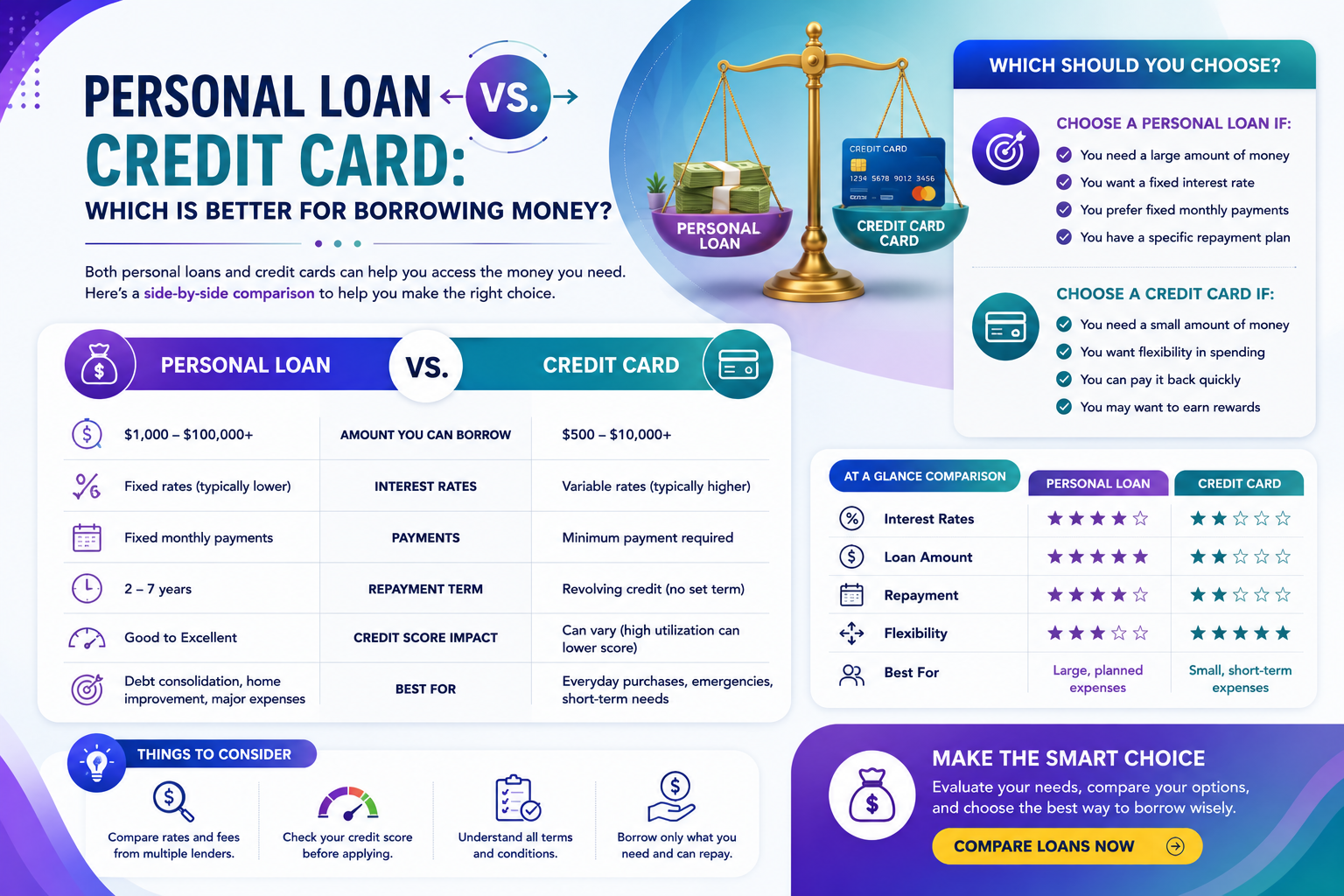
The average interest rate for personal loans can vary significantly based on the lender, borrower creditworthiness, and loan specifics. Generally, personal loan rates range from around 6% to 36%. Borrowers with excellent credit scores may secure rates at the lower end of this spectrum, while those with poorer credit may face higher rates. Conversely, credit cards generally have higher average interest rates, often between 15% and 25%, making them a more expensive option for borrowing over time.
Several factors influence the interest rates for both personal loans and credit cards. For personal loans, the repayment term, loan amount, and the borrower’s credit score play pivotal roles. Lower loan amounts and shorter repayment terms often result in higher interest rates. For credit cards, the type of card can significantly affect the rate—premium cards may offer lower rates but can come with annual fees. Additionally, the borrower’s credit profile is essential, as higher scores can lead to better rates.
Understanding how these interest rates impact the total cost of borrowing is vital. For instance, if a borrower opts for a personal loan at 10% for a $10,000 loan to be repaid over five years, they may end up paying around $2,500 in interest. In contrast, if they were to charge the same amount on a credit card with a 20% interest rate and only made minimum payments, the total interest could easily double, drastically increasing the overall cost of borrowing.
Loan Amounts and Limits
When considering borrowing options, the loan amounts available through personal loans and credit cards play a crucial role in the decision-making process. Personal loans typically offer larger borrowing limits compared to credit cards, which can significantly influence a borrower’s strategy for financing large purchases or consolidating debt.
Personal loans generally have fixed amounts that range from a few thousand dollars to tens of thousands, depending on the lender’s criteria and the borrower’s creditworthiness. For instance, a borrower may obtain a personal loan of up to $50,000 or more, which can be beneficial for significant expenses such as home renovations, medical bills, or educational costs. This predictability in borrowing allows individuals to plan their repayments effectively as they usually come with fixed interest rates and a predetermined repayment schedule.
On the contrary, credit cards usually have lower limits, which can vary widely based on the user’s credit history and the issuer’s guidelines. The typical credit limit for a standard credit card might range from $500 to $10,000, though higher limits are possible for those with excellent credit ratings. However, the flexible nature of credit cards can be appealing as they allow borrowers to utilize funds up to their limit for various expenses, albeit often at higher interest rates than personal loans.
It is crucial to consider the implications of borrowing large sums on credit cards as opposed to taking out a personal loan. Using credit cards to finance considerable purchases can lead to accumulating high-interest debt quickly, particularly if the balance is not paid off within a month. In contrast, personal loans allow for structured repayments that can ease the burden of debt over time. Ultimately, understanding the available loan amounts and limits is essential for making informed financing decisions that align with one’s financial goals.
Repayment Terms and Flexibility
When considering borrowing options, understanding the repayment terms and flexibility is crucial in making an informed decision between personal loans and credit cards. A notable difference lies in how borrowers repay the amount borrowed. Personal loans typically feature fixed repayment terms, which means that the borrower pays a predetermined amount each month until the loan is fully repaid. This fixed schedule can provide stability and predictability for budgeting purposes, making it easier for borrowers to plan their finances.
In contrast, credit cards offer more flexible repayment options, as they allow users to pay a minimum amount of their outstanding balance each month. However, this flexibility comes with the potential for accruing high interest charges, which can substantially increase the total cost of borrowing over time if the balance is not promptly paid off. Therefore, while credit cards provide the advantage of adaptable payment schedules, borrowers need to be cautious to avoid debt traps.
Another significant factor is the length of the payoff timeline. Personal loans often have set terms ranging from a few months to several years, with loan amounts and repayment periods tailored to the borrower’s needs. This fixed term means that borrowers know exactly when their debt will be paid off, which can serve as a motivational factor. Conversely, credit card repayments can extend indefinitely, leading to persistent debt levels if not managed appropriately.
Ultimately, the choice between these two borrowing options should also focus on individual financial practices. Those who prefer consistency and control over their repayment schedule might lean toward personal loans, whereas those needing immediate access to funds with the luxury of flexible payments may opt for credit cards. It is essential for borrowers to assess their financial situation, including income stability and spending habits, to determine the option that best suits their needs.
Usage Scenarios: When to Choose Each Option
When considering borrowing options, understanding when to choose a personal loan as opposed to a credit card can significantly impact one’s financial health. Each option presents unique advantages and is suited for different financial scenarios.
For large, one-time expenses, such as medical bills or major home repairs, a personal loan is often the preferable choice. Personal loans tend to have lower interest rates compared to credit cards, making them a suitable option for financing substantial costs. Borrowers typically benefit from fixed monthly payments over a set term, which aids in budgeting and reduces the uncertainty of fluctuating interest rates.
Conversely, credit cards can be advantageous for smaller, more immediate borrowing needs, particularly in emergencies. Their accessibility allows users to cover urgent costs quickly, as borrowing limits are readily available. For example, if your car breaks down unexpectedly, using a credit card can provide immediate funds while waiting for a personal loan approval, which might take longer.
Additionally, credit cards often offer rewards and cashback incentives, making them suitable for planned expenditures, such as travel or everyday purchases. When the borrower can repay the amount within the grace period, they can effectively utilize their credit card without incurring interest charges, thus benefiting from the convenience and rewards of credit.
Another notable instance for considering personal loans is debt consolidation. If an individual is struggling with high-interest debt from multiple sources, a personal loan can simplify payments and potentially lower interest rates. This can ease financial strains, as it consolidates multiple debts into a single monthly payment.
Ultimately, the decision between a personal loan and a credit card hinges on the purpose of borrowing and personal financial circumstances. Evaluating the specific need, whether it’s for planned expenses, emergencies, or debt consolidation, will determine the most effective borrowing option for the individual.
Understanding Fees and Penalties
When considering borrowing options, understanding the various fees and penalties associated with personal loans and credit cards is crucial. Personal loans generally have a set of predefined fees that can influence the overall cost of borrowing. One of the most common fees is the origination fee, which is charged by lenders to process the loan application. This fee can range from 1% to 5% of the loan amount and is often deducted from the disbursed funds, thereby reducing the amount available to the borrower.
Additionally, personal loans may incur late payment fees if the borrower fails to make payments on time. These fees not only increase the financial burden but can also negatively impact the borrower’s credit score. Borrowers should thoroughly read the loan agreement to understand the specific fees and how they may apply in different situations.
On the other hand, credit cards come with a different set of fees that are important to consider. Many credit cards impose annual fees, particularly ones that offer rewards or benefits. Additionally, late payment fees can be significant if a payment is not made by the due date. A missed payment can also lead to an increase in the card’s interest rate, which could create a more expensive cycle of debt.
Another important fee associated with credit cards is the foreign transaction fee. For individuals planning to travel abroad or make purchases in foreign currencies, these fees can add up quickly, often ranging from 1% to 3% of the transaction amount. Therefore, it is advisable to seek credit cards that do not impose foreign transaction fees for frequent travelers.
In conclusion, both personal loans and credit cards include various fees and penalties that borrowers should be mindful of. Understanding these costs can significantly impact borrowing decisions, enabling individuals to choose the most cost-effective solution for their financial needs.
Impact on Credit Score
When considering borrowing methods, it’s essential to understand how personal loans and credit cards impact credit scores. Both avenues for obtaining funds have distinct effects on credit profiles that can influence an individual’s ability to secure additional credit in the future.
Initially, using a credit card can lead to fluctuations in credit scores, primarily due to its effect on credit utilization. Credit utilization refers to the ratio of borrowed funds to available credit limits, and a high utilization rate can negatively impact credit scores. Ideally, borrowers should maintain a utilization rate below 30% to present themselves as responsible borrowers. When credit card balances are kept low and payments made punctually, cardholders can enhance their creditworthiness over time.
In contrast, personal loans may have a different effect. These loans are typically installment-based, meaning they require fixed payments over a set period. When borrowers take out a personal loan, they receive a lump sum, and repaying this debt over time contributes positively to their credit history, demonstrating reliability and responsibility. Moreover, personal loans can diversify the types of credit a borrower holds, which can also positively impact their credit score.
However, it is crucial to understand the long-term consequences of each borrowing method. Failing to repay credit card balances can result in accruing high-interest debt, potentially lowering the credit score significantly. Conversely, missing payments on a personal loan can also lead to similar negative outcomes. Therefore, timely payments are vital in maintaining a favorable credit score, regardless of the borrowing method selected.
Ultimately, both personal loans and credit cards can serve strategic purposes in managing finances, but their implications on credit scores are notably distinct. Borrowers should carefully evaluate their financial situations and consider how each option aligns with their long-term credit goals before deciding on a borrowing method.
Conclusion and Recommendations
After examining the fundamental differences between personal loans and credit cards, it is clear that each borrowing option serves distinct purposes and financial needs. Personal loans, characterized by fixed repayment schedules and lower interest rates, can be particularly advantageous for large, one-time expenses such as home renovations, debt consolidation, or significant purchases. Borrowers seeking predictability in repayments and a structured plan would find personal loans a suitable choice.
On the other hand, credit cards offer flexibility for everyday purchases and the convenience of revolving credit. They can be beneficial for individuals who manage their spending diligently and can pay off balances quickly to avoid accumulating high-interest debts. In situations where expenses are smaller and occur sporadically, credit cards can provide an efficient means of managing short-term financial needs.
Ultimately, the decision between using a personal loan or a credit card hinges on individual circumstances. Factors such as the size of the borrowing amount, the urgency of the financial need, and one’s ability to repay should guide the choice. For significant financial obligations, where interest rates and payment timelines matter greatly, personal loans may emerge as the more prudent option. Conversely, for those who frequently require access to readily available funds and can commit to timely payments, credit cards can serve as an effective financial tool.
In summary, both personal loans and credit cards have their respective strengths and weaknesses. By assessing one’s financial situation and personal preferences regarding borrowing, individuals can make informed decisions that align with their unique economic scenarios. Thoughtful consideration will lead to the selection of the most appropriate option, whether that be a personal loan for structured support or a credit card for flexible spending.