
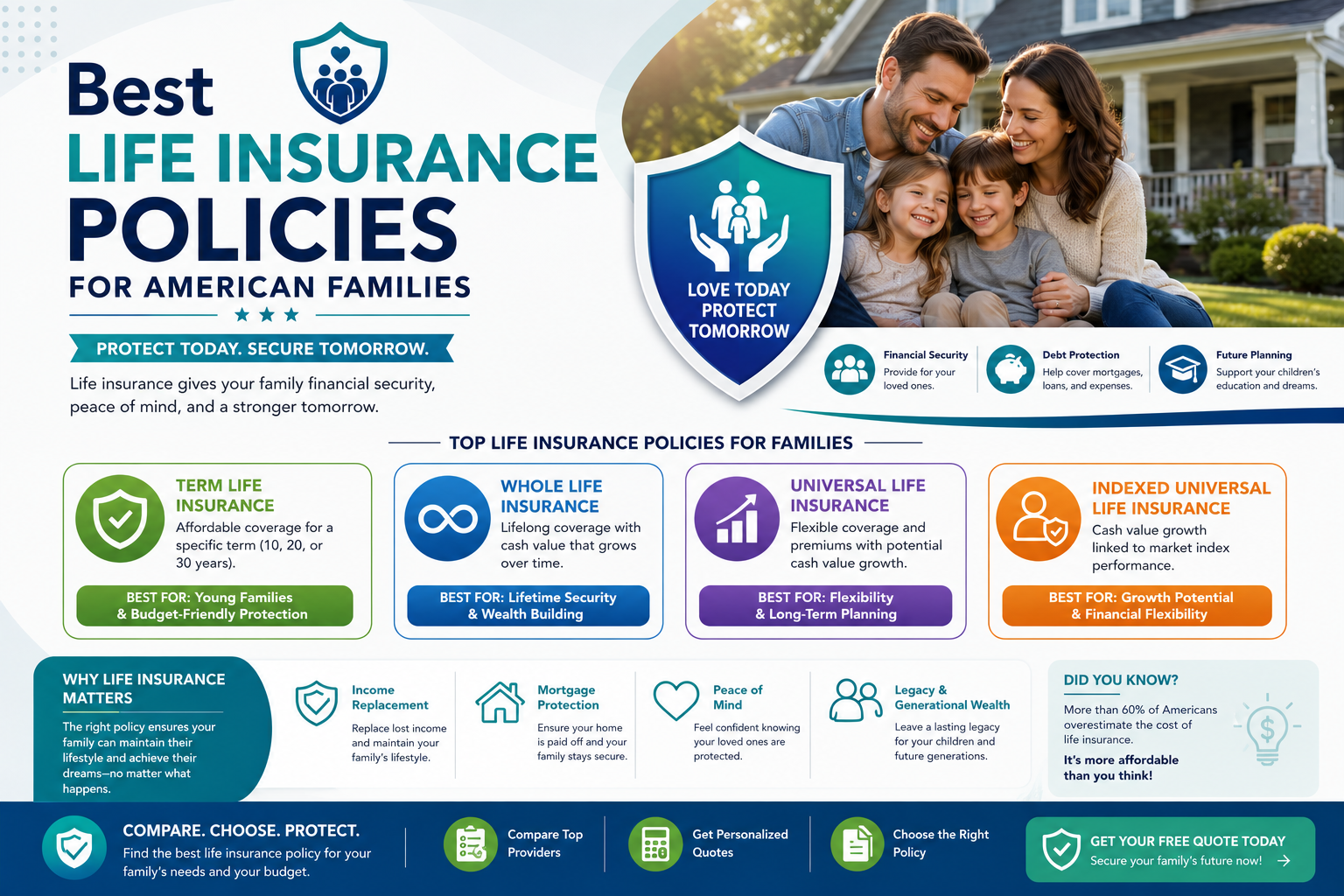
Understanding Life Insurance
Life insurance is a financial product designed to provide monetary support to beneficiaries upon the death of the policyholder. It functions on a straightforward principle: the policyholder pays regular premiums to an insurance company, and in return, the insurer promises a specified sum of money, known as the death benefit, to be paid out upon the policyholder’s death.
Understanding the basic concepts associated with life insurance is crucial for American families. There are primarily two types of life insurance policies: term life and permanent life. Term life insurance provides coverage for a specific time period, typically ranging from 10 to 30 years, and pays out a death benefit if the insured passes away during that term. In contrast, permanent life insurance, which includes whole life and universal life policies, offers coverage throughout the insured’s lifetime, as long as premiums are paid. Permanent life insurance also builds cash value over time, which can be accessed via loans or withdrawals.
The importance of having life insurance cannot be overstated, as it plays a vital role in ensuring financial security for families. In the unfortunate event of an untimely death, life insurance can cover immediate expenses such as funeral costs, mortgage payments, and daily living expenses. More importantly, it can help sustain a family’s standard of living, providing resources for children’s education and other long-term goals.
It is essential for families to assess their individual needs and circumstances when considering life insurance options. Factors such as income, number of dependents, outstanding debts, and long-term financial objectives should all be evaluated. By taking the time to understand life insurance thoroughly, families can make informed decisions that effectively safeguard their financial future.
Types of Life Insurance Policies
Life insurance plays a vital role in ensuring financial security for families, particularly in the United States. It is essential for American families to familiarize themselves with the different types of life insurance policies available to them. Among the most popular options are term life insurance, whole life insurance, and universal life insurance, each catering to distinct needs and preferences.
Term Life Insurance is one of the most straightforward types of life insurance. It covers the policyholder for a specified period, typically ranging from 10 to 30 years. If the insured passes away during this term, the policy pays out a death benefit to the beneficiaries. This type of policy is often favored by families looking for affordable premiums and straightforward coverage, particularly those who want to secure a financial safety net during crucial years, such as while raising children or paying off a mortgage.
Whole Life Insurance, on the other hand, provides coverage for the entire lifetime of the policyholder, as long as premiums are paid. This type of policy not only offers a death benefit but also includes a cash value component that accumulates over time. Policyholders can borrow against this cash value or even surrender the policy for cash. Whole life insurance often appeals to families interested in lifelong coverage and those looking to leave behind a legacy or inheritance.
Lastly, Universal Life Insurance is a flexible policy that combines elements of both term and whole life insurance. It allows policyholders to adjust their premiums and death benefits, enabling them to adapt their coverage as their financial situation changes. This option is beneficial for families who value both protection and investment opportunities but requires a commitment to regularly monitor and manage the policy.
Understanding the implications of each of these life insurance options is crucial for American families as they navigate financial planning and prepare for the unexpected. Choosing the right policy can significantly impact the long-term financial health and security of loved ones.
Factors to Consider When Choosing a Policy
Choosing the right life insurance policy is a significant financial decision for families, as it can provide essential financial support in the event of a tragedy. There are several key factors that families should evaluate to ensure that they select a policy that meets their specific needs.
The first consideration is the coverage amount. It is crucial for families to assess how much life insurance they require, which often depends on factors such as outstanding debts, ongoing living expenses, and future financial goals like children’s education. A coverage amount that is too low may not adequately support beneficiaries, while too much coverage can lead to unnecessary premium costs.
Another important factor is the premium costs. Families must determine what they can afford in terms of monthly or annual payments. It is advisable to seek policies that provide good coverage while keeping premiums within a manageable range. Comparing quotes from different insurers can help families find a balance between premium costs and the coverage they need.
The reputation of the insurer is also a crucial element to consider. Families should research insurance companies to ensure they are reliable and have a history of fulfilling claims efficiently. Checking ratings from independent agencies can give insights into an insurer’s financial stability and customer service performance.
Additionally, families may want to explore any riders or benefits that the policy may offer. Riders are optional additions to a policy that can enhance coverage, such as accelerated death benefits or accidental death coverage. Understanding these options allows families to customize their policies according to their unique circumstances, potentially leading to better protection.
In conclusion, evaluating these factors—coverage amount, premium costs, insurer reputation, and available riders—can assist families in choosing a life insurance policy that adequately safeguards their financial future and fulfills their specific needs.
Best Life Insurance Providers for Families
When searching for life insurance options tailored to the needs of American families, several leading providers stand out due to their commitment to offering family-friendly policies. These companies understand the importance of securing a financial safety net for family members and provide a variety of options to cater to different needs and budgets.
One of the most recognized providers is State Farm. This company offers comprehensive life insurance policies that are designed with families in mind. State Farm is particularly noted for its customizable plans, allowing families to select coverage that meets their specific requirements. Their agents are known for providing personalized service, helping families navigate through their options and choose the best policy.
Another contender in this competitive market is Allstate. Allstate offers a robust selection of term and whole life policies, with a focus on affordability and flexibility. They have unique options for families, such as those that include coverage for children, ensuring that families are protected even when the unexpected occurs. Allstate’s user-friendly digital tools also make it easier for families to compare policies and manage their accounts online.
MassMutual is also highly regarded for its family-oriented insurance products. Known for its whole life insurance options, MassMutual provides lifelong coverage along with the opportunity to build cash value over time. Many families appreciate the financial stability that comes with this type of insurance, and MassMutual’s strong customer service reputation adds an additional layer of trust for policyholders.
Lastly, Prudential stands out for its commitment to providing tailored coverage. Prudential’s life insurance policies are adaptable, allowing families to customize their coverage levels according to individual needs. Their comprehensive resources and guidance also assist families in understanding the various aspects of life insurance, empowering them to make informed decisions about their policies.
In conclusion, selecting the right life insurance provider is integral for American families looking to secure their financial future. Factors such as customization, affordability, and strong customer service can significantly influence the decision-making process. These companies exemplify what it means to cater to families, ensuring that the coverage is both comprehensive and accessible.
Comparative Analysis of Top Policies
When evaluating life insurance policies for American families, it is essential to consider various factors such as affordability, benefits provided, and customer service ratings. Each of these elements plays a crucial role in determining the overall value and suitability of a life insurance policy. This analysis highlights some of the leading life insurance options currently available in the market.
First and foremost, affordability is a significant determinant for many families when selecting a life insurance policy. Many providers offer term life insurance as a cost-effective solution, which typically features lower premiums compared to whole life insurance. Companies like Banner Life and AIG are noted for their competitive pricing structures, making them attractive choices for budget-conscious families.
In addition to affordability, the benefits offered by policies can greatly influence a family’s decision. Some top insurers, such as Prudential and State Farm, provide an array of riders and add-ons. These options allow policyholders to customize their coverage according to their unique needs. Features may include accelerated death benefits, waiver of premium, and child riders, which can significantly enhance the policy’s overall value.
Customer service ratings are another critical aspect to take into account. Providers like New York Life and MassMutual consistently receive high marks for their customer support, with positive feedback regarding their claim handling processes and overall responsiveness. High customer satisfaction ratings can be an indicator of a company’s reliability, particularly during the challenging times when families must file claims.
Ultimately, when assessing life insurance policies, families should weigh the pros and cons of affordability, available benefits, and customer service performance. Each family’s situation is unique, and a customized approach that considers these factors will aid in selecting the most appropriate life insurance policy.
The Application Process Explained
The life insurance application process is a crucial step for individuals seeking to secure financial protection for their loved ones. Understanding this process can significantly ease any apprehensions and ensure a smooth experience. To begin with, individuals need to select a suitable insurance policy that meets their needs and financial situation. This involves researching different types of life insurance, such as term and whole life policies, to determine which aligns with personal objectives.
Once the appropriate policy is chosen, applicants must gather necessary documentation. Common documents required include identification verification, such as a government-issued ID, and financial records that demonstrate income and assets. Additionally, health-related information is essential, and applicants may need to undergo a medical examination or answer questions regarding medical history and lifestyle choices.
During the application process, it is crucial to provide accurate and honest information. Insurers assess the risk profile of applicants based on the details provided, which influences underwriting decisions and premium rates. To increase the likelihood of approval, potential policyholders should prepare for an interview with the insurer, which often occurs over the phone or in person.
While many applications progress smoothly, some hurdles may arise. For instance, discrepancies in provided information or a history of serious health issues might lead to additional scrutiny or even denial of coverage. To mitigate these potential issues, applicants should ensure that all documentation is complete and any pre-existing conditions are disclosed transparently.
In summary, understanding the life insurance application process involves knowing what to expect, preparing the right documents, and being honest about personal health and financial context. By following these guidelines, individuals can navigate the application process with greater confidence and ease, securing the protection their families deserve.
Understanding Policy Exclusions and Limitations
When considering life insurance, it is crucial for American families to understand the exclusions and limitations inherent in many policies. These aspects dictate the conditions under which the insurer will not pay out benefits, thereby shaping the overall effectiveness of the policy. Generally, these exclusions are designed to protect the insurance company from undue risk, but they can also create unexpected gaps in coverage for policyholders.
One common exclusion pertains to suicide. Many life insurance policies implement a waiting period, often two years, during which if the insured dies by suicide, the policy may not pay out. This provision can be particularly significant for families, as it may lead to surprises at a time of vulnerability.
Another typical limitation involves pre-existing medical conditions. Insurers may refuse coverage or impose a waiting period for any death resulting from conditions that existed prior to the policy’s initiation. This could impact families who are unaware of how their health history can affect their coverage. Therefore, it’s vital to disclose all relevant health information when applying for life insurance.
Additionally, many policies include a clause on risky activities. Deaths resulting from high-risk activities such as skydiving, scuba diving, or participating in similar adventurous pursuits may not be covered. This exclusion reflects the insurer’s intent to minimize exposure to potential high claims from such risks. Families should carefully review the terms associated with their chosen policy to ensure they understand what activities may jeopardize their coverage.
Lastly, instances of fraud or misrepresentation in the application process can lead to a denial of benefits. It is essential to provide accurate information when applying for life insurance to avoid future complications. By understanding these exclusions and limitations, families can better navigate their options and select a policy that provides the most comprehensive protection for their loved ones.
The Importance of Regular Policy Review
Life insurance serves as a crucial safety net for families, and ensuring that a policy remains adequate and relevant is essential. As families evolve through significant life events—such as marriage, the birth of children, or shifts in economic circumstances—it becomes imperative to regularly review life insurance policies. This proactive approach could reveal the need for modifications to existing coverage, thus ensuring that families remain adequately protected.
When a couple marries, their financial dynamics change significantly. New responsibilities arise, and it is essential to reassess life insurance policies to align with these developments. Furthermore, the birth of children introduces additional financial burdens, including education and caregiving costs. In this scenario, families may need to increase their coverage to secure the financial well-being of their dependents in case of unforeseen events.
Moreover, financial situations can fluctuate due to job changes, promotions, or economic downturns. An increase in income may necessitate higher policy limits, while a decrease could prompt a reassessment of existing coverage to ensure affordability. Regular policy reviews should therefore be an integral part of financial planning, allowing families to adapt their life insurance to match their current situation and future goals.
In addition to life changes, families should also consider annual evaluations of their life insurance policies. This practice enables families to keep informed about any potential updates in terms, rates, or new options available in the market. As policies can have numerous stipulations, keeping track of these details ensures that families are not only protected but also optimizing their coverage at the best possible cost.
In conclusion, regularly reviewing life insurance policies is vital. By adjusting coverage to reflect changing circumstances, families can ensure that they maintain adequate protection for their loved ones and adapt to the inevitable shifts that life brings.
Final Thoughts on Choosing Life Insurance
Choosing the right life insurance policy is a pivotal decision for American families. It is essential to comprehend not only the various types of policies available but also how each type can cater to the unique needs of your family. Life insurance serves as a financial safety net, ensuring that loved ones are protected in the event of an untimely demise. When evaluating options, families should prioritize factors such as coverage amount, premiums, and the financial stability of the insurance provider.
It is advisable to start by assessing your family’s current financial situation and future needs. This assessment should take into account outstanding debts, education costs for children, and other long-term financial goals. Next, researching different life insurance providers and their offerings can yield valuable insights. Reading customer reviews and checking ratings from trusted sources will assist in making an informed choice.
Furthermore, it is important to recognize that the landscape of life insurance can be dynamic. Policies can evolve with changes in life circumstances, so families must remain engaged with their coverage choices over time. Consulting with a financial advisor or insurance specialist can provide personalized guidance, helping families navigate the complexities of life insurance.
Ultimately, being proactive in selecting a life insurance policy is crucial. Families should aim to find a balance between adequate coverage and affordability while ensuring that their policy aligns with their long-term financial plans. By considering these factors and doing thorough research, American families lay the groundwork for financial security and peace of mind, thereby reinforcing the importance of informed decision-making in the realm of life insurance.